
Introducción
El mobiliario francés experimentó importantes transformaciones entre los siglos XVII y XVIII a través de los Luis XIV, XV y XVI . Cada época refleja no solo los gustos estéticos de la época, sino también los cambios culturales, políticos y sociales de Francia. Desde la majestuosidad barroca del estilo Luis XIV, pasando por la ligereza rococó del Luis XV, hasta la elegancia neoclásica del Luis XVI, estas piezas se han convertido en iconos de las antigüedades y el diseño de época.
Si eres un entusiasta de los muebles antiguos, esta guía te ayudará a comprender las diferencias y características clave de estos tres estilos extraordinarios.
Estilo Luis XIV (1643-1715): Esplendor y grandeza
Contexto histórico e influencias
El estilo Luis XIV surgió en el contexto de la monarquía absoluta del Rey Sol , quien buscaba expresar su poder a través del arte y la arquitectura. La construcción del Palacio de Versalles representa la culminación de esta visión, convirtiéndose en el modelo para el mobiliario de toda la nobleza europea.
Características generales
- Líneas monumentales y simétricas , de aspecto imponente y solemne.
- Muebles sólidos , a menudo rectangulares o cuadrados, con proporciones equilibradas.
- Rica decoración con motivos mitológicos, hojas de acanto, cabezas de león y motivos solares, en homenaje al Rey Sol.
- Patas torneadas y estriadas , a menudo con garras de león o rizos ornamentales.
Materiales y decoraciones
- Maderas nobles como roble, nogal, ébano y palo rosa.
- Superficies ricamente incrustadas con marfil, carey y latón.
- Bronces dorados , utilizados para tiradores, frisos y adornos.
- Tejidos suntuosos como el terciopelo y el brocado, a menudo con motivos florales o arabescos.
- Dorado y lacado para darle un aspecto lujoso y prestigioso.
Muebles icónicos de estilo Luis XIV
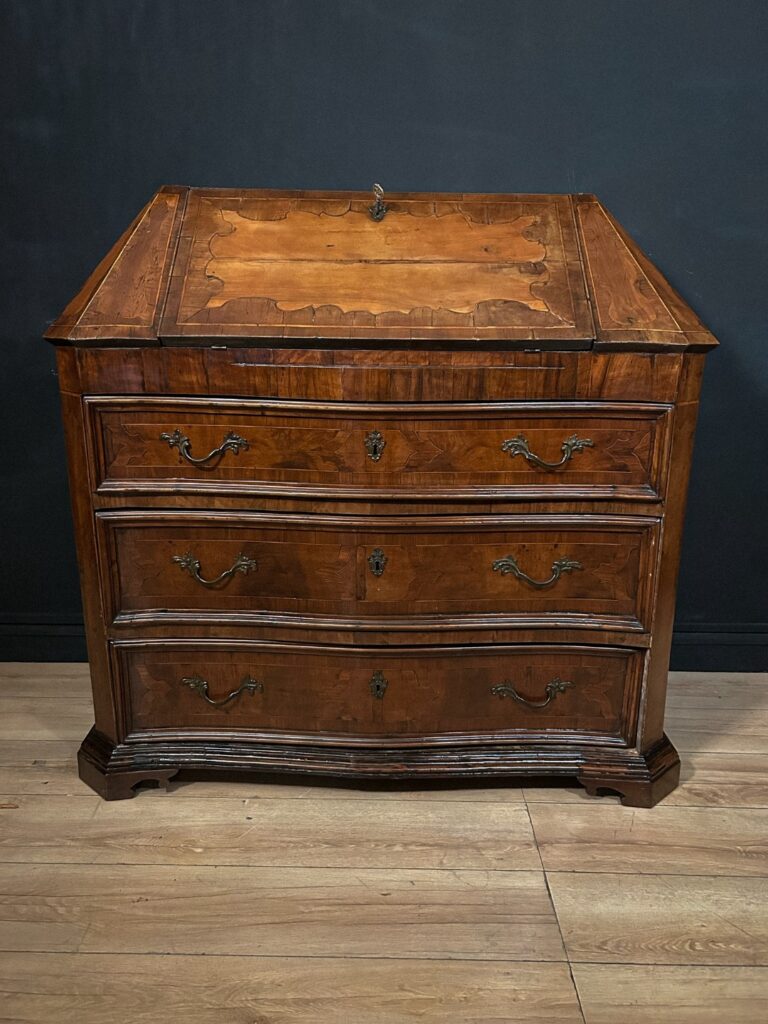
- Cómoda con elaboradas incrustaciones y detalles dorados.
- Escritorios y secreteres con paneles marqueteriados y patas talladas.
- Sillones y sillas de grandes dimensiones , con respaldos altos y amplios apoyabrazos.
- Mesas de comedor señoriales , a menudo con patas de columna o de garra.
Estilo Luis XV (1715-1774) – Elegancia y ligereza
Contexto histórico e influencias
Tras la muerte de Luis XIV, la sociedad francesa se alejó del rigor de la monarquía absoluta para adoptar un estilo de vida más refinado y desenfadado. Así nació el estilo rococó , que influyó profundamente en el diseño de muebles durante el reinado de Luis XV .
Características generales
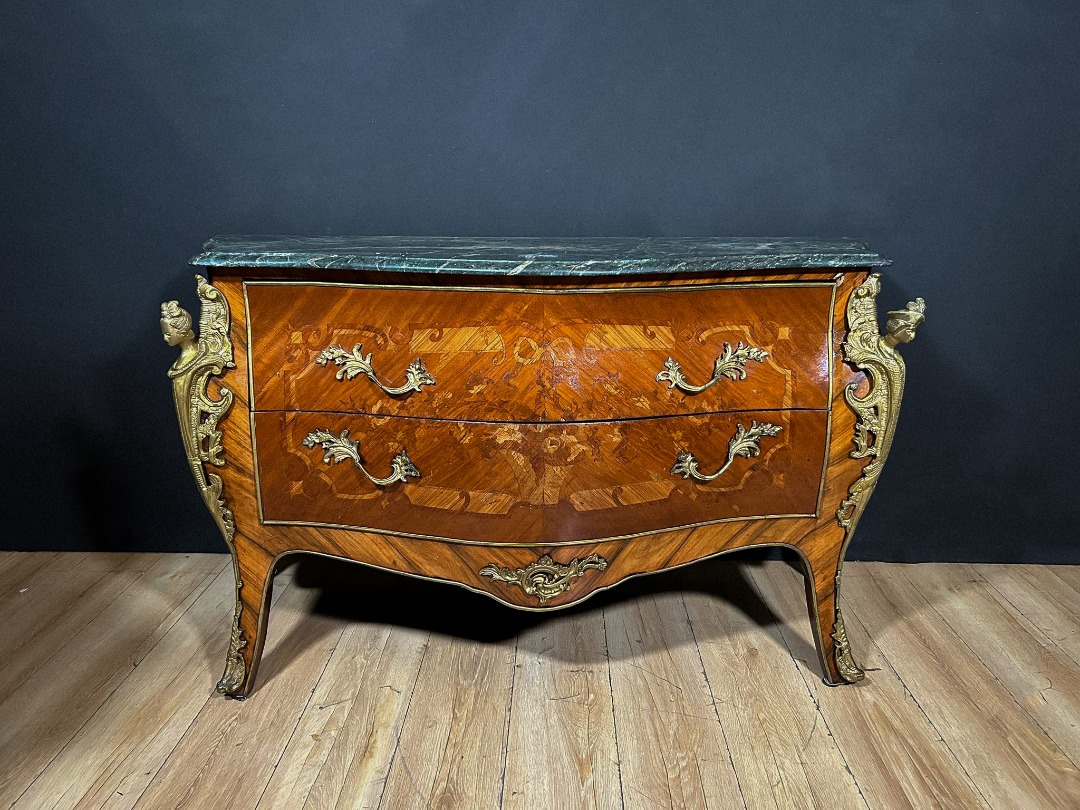
- Formas curvas y sinuosas , con un abandono de las estructuras rígidas y simétricas del estilo anterior.
- Decoraciones ligeras y delicadas , con motivos florales, volutas y arabescos.
- Patas delgadas y curvadas , a menudo en forma de S, llamadas “patas de cabriolet”.
- Muebles más pequeños y funcionales , pensados para espacios privados y conversaciones íntimas en salones.
Materiales y decoraciones
- Maderas más claras, como el cerezo, el fresno y el arce, a menudo se dejan al natural o lacadas.
- Incrustaciones con motivos florales y paisajes , inspirados en la naturaleza.
- Bronces dorados menos vistosos , pero todavía presentes en los detalles ornamentales.
- Superficies lacadas y colores pastel , como el rosa, verde, celeste y crema.
Muebles icónicos del estilo Luis XV
- Sillones Bergère , amplios y cómodos, con brazos acolchados y respaldo inclinado.
- Consolas y mesas de centro , con formas curvas y ligeras.
- Escritorios Bonheur-du-jour , pequeños y femeninos, ideales para escribir y mantener correspondencia.
- Camas y cabeceros curvos , con tallas florales y tapizados de seda o terciopelo.
Estilo Luis XVI (1774-1792): Clasicismo y refinamiento
Contexto histórico e influencias
Bajo el reinado de Luis XVI, Francia experimentó un retorno a los ideales de la Antigüedad clásica. El arte y el mobiliario se vieron influenciados por el estilo neoclásico , inspirado en la arquitectura griega y romana, con líneas más sobrias y elegantes.
Características generales
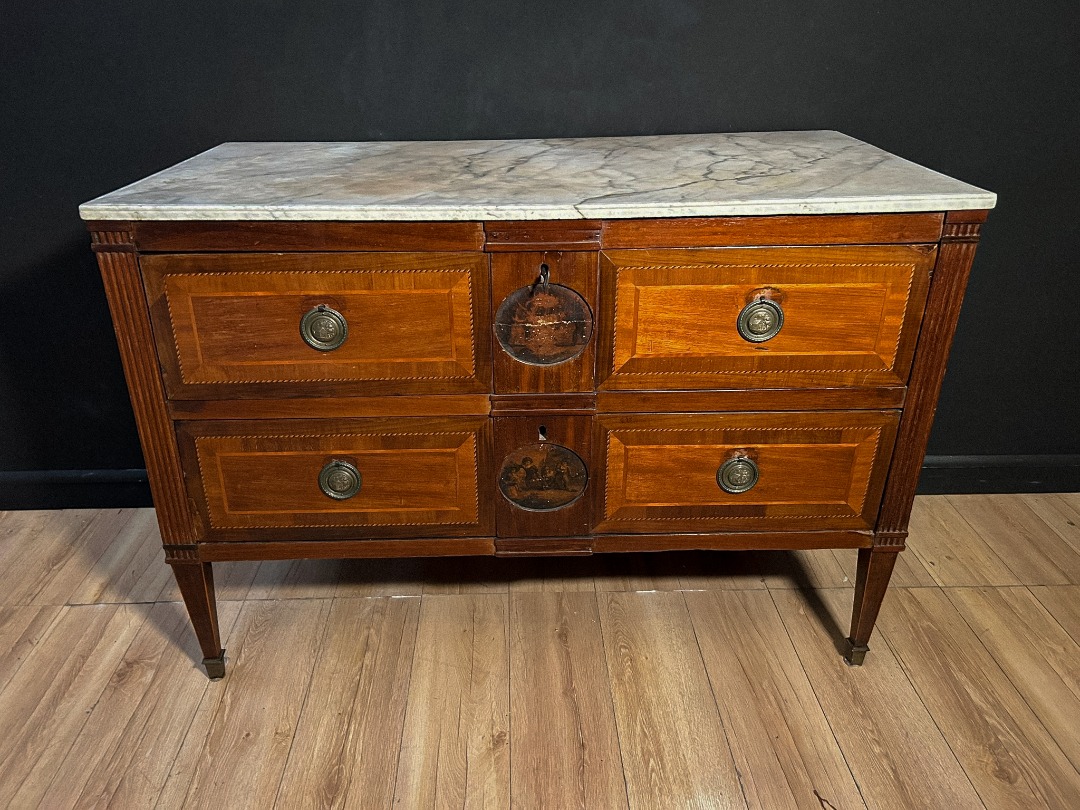
- Estructuras geométricas y simétricas , en contraste con la asimetría rococó.
- Decoraciones inspiradas en la Antigüedad , con motivos como guirnaldas, columnas y rosetones.
- Patas rectas y estriadas , a menudo en forma de columna dórica o jónica.
- Mobiliario más sobrio y refinado , con proporciones armoniosas.
Materiales y decoraciones
- Maderas exóticas y oscuras como la caoba y el palo rosa.
- Incrustaciones con motivos geométricos y clásicos.
- Bronces dorados menos vistosos , pero todavía utilizados para manijas y decoraciones.
- Tejidos decorados con motivos clásicos , como festones y escenas mitológicas.
Muebles icónicos de estilo Luis XVI
- Mesas de juego y escritorios , de líneas elegantes y sobrias.
- Sillas y sillones con respaldo ovalado , patas rectas y proporciones armoniosas.
- Camas con dosel ligero , a menudo con columnas estriadas.
- Cómoda con incrustaciones geométricas , inspirada en la arquitectura clásica.
Conclusión: ¿qué estilo elegir?
Si desea amueblar su hogar con un toque de elegancia francesa, puede elegir entre:
- Luis XIV para un efecto regio y monumental.
- Luis XV para un ambiente romántico y refinado.
- Luis XVI para una estética clásica y sobria.
¿ Buscas muebles auténticos de estilo Luis XIV, XV o XVI? Descubre nuestra colección de muebles antiguos y de época. 👉 Visita nuestra tienda online . 🏛️✨